Why We Provide a Google Review Funnel Without Review Gating
Review gating can look like a shortcut to a 5.0 rating. Here is why Review Revolution built its Google review funnel to keep the public review link open to every guest, and what it does instead.

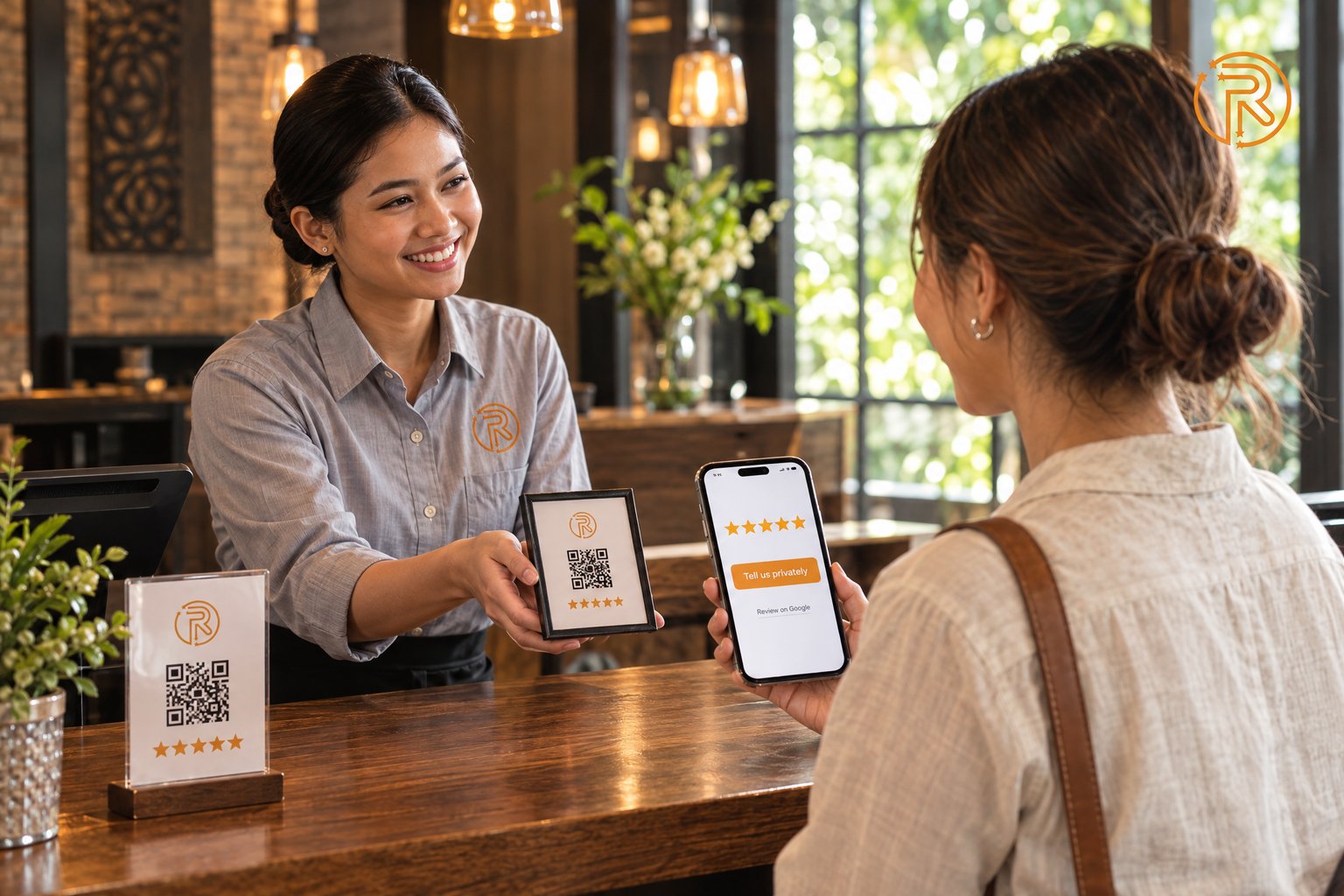
Review gating is the practice of asking customers how their experience went, then sending happy ones to a public review site and unhappy ones to a private feedback form. It is tempting because it makes a rating climb fast. It is also exactly what Google's policy tells businesses not to do.
We provide a Google review funnel without review gating on purpose. This article explains what gating is, why it backfires, and how our funnel collects private feedback and public reviews at the same time without shutting anyone out.
What Review Gating Actually Is
Gating is selective solicitation. A business asks for a rating first, then only shows the public review link to people who score high. Common versions include texting for a rating and requesting a Google review only from top scorers, or offering a discount on a future visit in exchange for five stars. The common thread is that the business decides whose opinion reaches the public. What shows up on Google stops being a fair sample of your customers and becomes a curated one.
What Google's Policy Says
Google's prohibited and restricted content policy for reviews lists, under fake engagement, "discouraging or prohibiting negative reviews, or selectively soliciting positive reviews from customers." Older versions of the guidance said much the same in different words, so this is not a new rule. A funnel that hides the Google link from unhappy guests falls under it. Read our Google review guidelines for businesses for the full picture, and what review gating is for the definition in more depth.
Why Gating Backfires
The policy risk is real: reviews can be removed and a listing can be restricted. Regulators are paying attention too, and the FTC has taken action against fake and manipulated reviews. But the commercial reasons matter just as much. A profile with only glowing reviews looks curated, and shoppers who sense filtering stop trusting every review on it. Unhappy guests who are blocked from speaking publicly often complain elsewhere, on social media or other sites you do not monitor. And a rating inflated by gating tells you nothing, so you lose the honest signal you need to fix the experience.
How Our Funnel Works Instead
A guest scans a Google review QR code or opens a follow-up email and gives an honest rating. A high rating leads to a clear public review step. A low rating opens a private form so a manager can follow up and fix the problem. Under that form, a smaller link to the same Google listing stays visible, so a guest who still wants to post publicly can do so without submitting private details first. Nobody is blocked, nobody is asked to raise a score, and no one is offered a reward for a particular rating. The review funnel and the negative review filter are a first step toward recovery, not a wall.
What You Gain Without Gating
You still get early warning. Private feedback reaches the right person within hours, which turns many unhappy visits into recoveries before a one-star review is written. You get an honest rating that customers believe, which converts better than a perfect score they doubt. And you stay inside the rules, so the reviews you earn are not at risk of removal. The funnel changes the order of the conversation, with a private route offered first, but it never removes the public option.
Ask Well Instead of Filtering
You do not need gating to get good reviews. Ask soon after the visit while it is fresh. Invite rather than pressure, and never ask for a specific star count. Keep the request short, personal, and easy to complete with one tap. Explain why reviews help a local business. Then reply to every review, including negative ones, promptly and politely. Our guide on how the review funnel works ethically covers the routing logic, and the wider Google reviews hub collects the rest of the playbook.
A funnel that decides who may speak publicly is not a funnel. It is a filter, and Google calls that review gating.
Route Feedback, Never Block It
Run a compliant Google review funnel with Review Revolution: branded QR codes, private recovery for unhappy guests, and a public Google path that stays open to everyone.
Wil je dit volledig geautomatiseerd?
Aan de slagVeelgestelde vragen
What is Why We Provide a Google Review Funnel Without Review Gating?
Review gating can look like a shortcut to a 5.0 rating. Here is why Review Revolution built its Google review funnel to keep the public review link open to every guest, and what it does instead. Review gating is the practice of asking customers how their experience went, then sending happy ones to...
Who is this for?
Businesses looking to grow their online reputation and Google reviews.
Gerelateerde pagina's
Features
Reviewfunnel
Een Google review funnel die tevreden klanten naar openbare reviewplatforms leidt en negatieve feedback privé opvangt. Ethische reviewgeneratie voor lokale bedrijven.
Blog
De reviewfunnel uitgelegd: prive-feedback voor openbare reviews
Hoe slimme funnels tevreden gasten naar Google leiden terwijl ze opbouwende kritiek eerst intern opvangen, ter bescherming van beoordelingen en relaties.
Features
QR-codes voor Google-reviews
Google review QR code generator voor tafels, balies en marketing. Gebrande review QR-codes die het aantal reviews en lokale SEO verhogen.
Features
Filter voor negatieve reviews
Vang negatieve feedback privé op voordat deze op openbare reviewsites terechtkomt. Bescherm je beoordeling met ethische private feedbackopvang en oplossingsworkflows.
Blog
Google-reviewrichtlijnen voor bedrijven: wat wel en niet mag
Een duidelijk, beleidsveilig stappenplan om gasten om Google-reviews te vragen zonder beloningen, nepfeedback of selectieve filtering die je profiel in gevaar brengt.
Blog
What Is Review Gating? Google's Policy and How Compliant Tools Invite Everyone
Review gating is asking only happy customers for a public Google review. Here is what Google prohibits, how major platforms invite every guest, and how a private form can sit next to an open Google link.